News in seconds. In your language.

Quetta, Balochistan is currently facing a severe and escalating flour crisis, with the price of a 50kg bag of flour exceeding 8,000 Pakistani Rupees. This dire situation has led to widespread food scarcity, causing significant hardship for the city's residents. The crisis has worsened due to the government's apparent failure to procure wheat from PASCO (Pakistan Agricultural Storage and Services Corporation), a critical agency for wheat supply. This inability to secure essential grain has directly contributed to the current shortages and exponential price increases, leaving many citizens struggling to afford basic food necessities. The ongoing crisis highlights a critical failure in supply chain management and government intervention, severely impacting the daily lives and food security of the population in Balochistan.

The article introduces Rachel Roddy's recipe for chicken with citrus and oregano, a dish with deep roots in Roman culinary tradition. The author reflects on the evolution of a specific restaurant at Via Bodoni 62 in Rome, starting with 'Da Rafaelle' which closed in 2009. The space was later taken over in 2011 by Augusto D’Alfonsi, owner of 'La Torricella,' who opened 'Piatto Romano' with his daughter Francesca managing it. 'Piatto Romano' continued the tradition of serving Roman food, including offal, before Francesca's brother, Andrea, eventually took over the operations in late 2013. The piece highlights the continuity and generational transfer of Roman dining traditions.

After nine years, the author has finally penned a recipe for banana bread for their column, prompted by acquiring a large bunch of over-ripe, brown bananas at a bargain price from a corner shop. This particular recipe is a vegan variation, substituting olive oil for butter and utilizing mashed bananas as a binder instead of eggs. A unique addition is miso, incorporated to enhance the umami flavor and increase satiety, with its salt content amplifying and rounding off the sweetness. For biodiversity and flavor, wholemeal spelt flour is recommended, though any flour will suffice. This recipe offers a solution for using over-ripe fruit, minimizing waste, and provides a healthier, flavorful alternative to traditional banana bread.
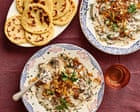
Food writer Alissa Timoshkina has shared two new Eastern European-inspired recipes featuring mushrooms: a tangy mushroom stew and a rustic cabbage and mushroom soup. The stew, inspired by Belarusian mačanka, is traditionally served with buckwheat pancakes, but Timoshkina's version incorporates Slovak lokše (potato pancakes) for dipping. The accompanying soup, though not tied to a specific region, aims to evoke a sense of 'home' for those familiar with Eastern European cuisine. Both recipes are presented as simple, seasonal, and embody the essence of the region's culinary traditions. The article promotes these dishes as comforting and flavorful options for readers.

An article discusses the optimal methods for storing bread to prevent it from going stale, emphasizing that refrigeration should be avoided. Sophia Handschuh, co-founder of Sourdough Sophia in London, explains that bread goes stale because the starch in the flour, which expands and absorbs water during baking, begins to dry up when exposed to air after being removed from the oven. To combat this, Handschuh recommends storing bread at room temperature in a greaseproof paper bag, which is often the bag it comes in from the bakery. While beeswax wraps can be used, she notes they are an expensive option and unnecessary for basic bread storage. The piece aims to provide practical advice for consumers struggling with bread freshness.
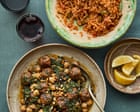
The article by Sami Tamimi introduces two recipes: lamb meatballs with spinach and chickpea stew (sabanekh) and Iraqi red rice (timman ahmar). Tamimi emphasizes the comforting, generous, and simple nature of these dishes, which are designed for sharing. The sabanekh features tender lamb meatballs in a spinach and chickpea stew, brightened with lemon, while the timman ahmar offers warmth, color, and sweetness from tomatoes, perfect for soaking up the stew's savory juices. Together, these recipes create a hearty and flavorful meal.

The article presents Gurdeep Loyal's quick and easy recipe for masala chickpea-parsnip fritters served with coconut sambol. These spicy fritters are inspired by the tikki-chaat carts prevalent across India, which typically offer freshly cooked chickpea, potato, or lentil patties. The accompanying coconut sambol, featuring coconut, mustard seeds, and lime, brings forth South Indian flavors, with an option to enhance tartness using tamarind paste. These fritters can be enjoyed as a snack, or transformed into a more substantial supper when served with additions like a dollop of yogurt, a fried egg, or avocado, offering a versatile meal option.
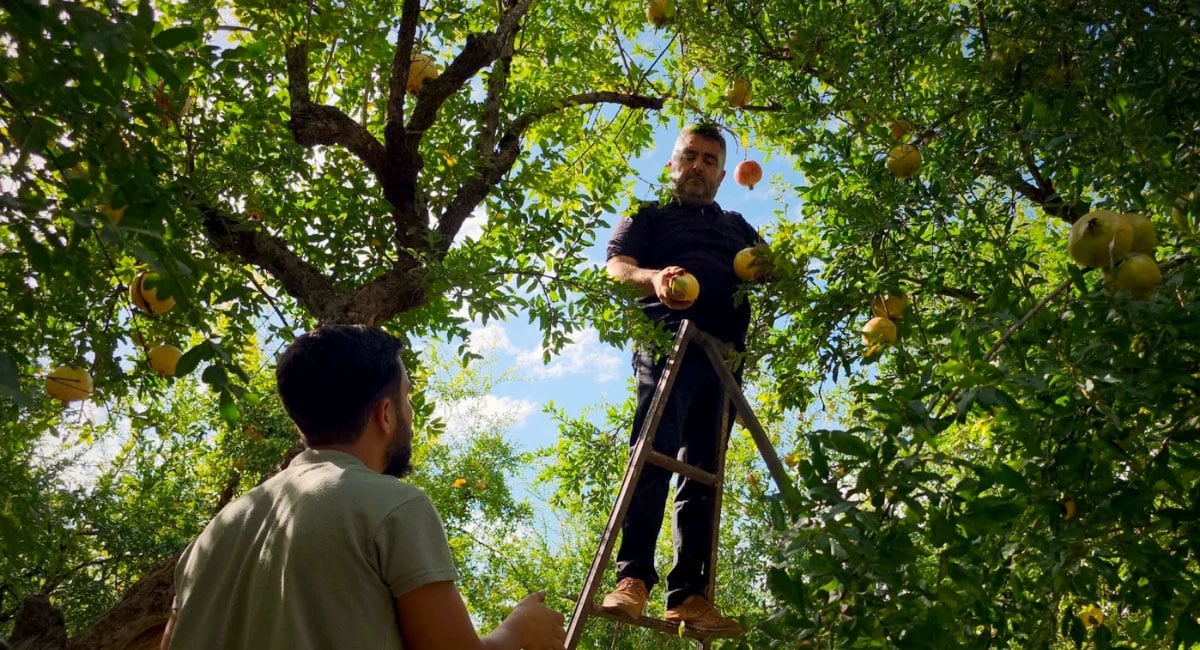
Pomegranate farmers in Idlib are actively searching for new markets to sell their excess harvest. This pressing need arises from a surplus of pomegranates, indicating a potentially successful growing season that has outpaced existing sales channels. The farmers, who rely on their agricultural output for their livelihood, are now faced with the challenge of preventing their valuable crops from going to waste. The situation highlights the economic vulnerabilities and logistical difficulties faced by agricultural communities in the region, particularly when local demand or traditional export routes are insufficient. Finding new markets is crucial for the financial stability of these farmers and the broader agricultural economy of Idlib, ensuring their hard work translates into sustainable income.
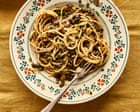
Jacob Kenedy, a chef known for his culinary creations, has shared two autumn pasta recipes that offer plant-based comfort and complex umami flavors. One recipe features a humble yet delicious spaghetti with lentils, a dish Kenedy describes as a personal and family favorite for its comforting earthiness, balanced by grassy olive oil and parsley. The second recipe is a vegetarian take on spaghetti and meatballs, utilizing aubergine veggie-balls as a meat-free alternative to traditional polpette. Kenedy highlights the versatility of "balls" (polpette) beyond meat, specifically praising courgette and, especially, aubergine for its rich and velvety texture. These recipes provide hearty, meat-free options for the autumn season, aligning with the "cucina povera" tradition of humble, flavorful meals.

Pakistan's wheat cultivation for the Rabi season is confronting significant hurdles due to a surging production cost, reaching Rs3,761 per maund, alongside critical water shortages that are jeopardizing irrigation supplies. The situation is further complicated by worries about the state of government wheat stocks and the absence of a defined indicative price for the crop, collectively raising serious concerns about the nation's food security. Khalid Nawaz Sadhraich of the PTI Kisan Wing has issued a stark warning, urging immediate government intervention to mitigate these escalating agricultural issues. He highlighted that both Punjab and Sindh provinces are expected to experience a substantial 22 percent water deficit during the current Rabi season, underscoring the urgency of the crisis.

This article discusses the classic French dessert Poires Belle Hélène, a dish consisting of vanilla-scented poached pears, vanilla ice cream, hot chocolate sauce, and a crunchy garnish. The author, Felicity Cloake, reflects on her recent discovery of the dessert's namesake, Offenbach’s 1864 operetta La Belle Hélène, which tells the story of Helen of Troy. The dessert was created by the renowned French chef Escoffier, who was inspired by the operetta and its popularity among Parisian diners, naming it after the work's heroine. While Escoffier named several dishes after the operetta, this particular combination of pears and chocolate has remained popular, with Nigel Slater noting their "extraordinary" compatibility. The article highlights the enduring appeal of this simple yet sumptuous pudding.

Buvette, a London offshoot of a popular New York brasserie, has opened in Neal’s Yard, Covent Garden, bringing a touch of French glamour to an area known for holistic therapies and healthy eateries. The restaurant, described as appealing to the 'Emily in Paris generation,' features a French-inspired menu with dishes like croque monsieur, rillettes de saumon, and salade niçoise, along with French drinks and pastries. This establishment is the London branch of Jody Williams’ West Village gastrothèque, offering 25 dishes, none priced above £18. While Buvette presents itself as a fresh concept, the reviewer suggests it echoes the style of earlier, more mainstream French-inspired restaurants like Café Rouge, offering a non-intimidating version of French dining.

This article details a taste test of supermarket miso pastes, evaluating their authenticity and flavor using a 'soup test' method. The traditional production of miso involves fermenting pulses with salt and koji, a grain inoculated with Aspergillus oryzae mould. Surprisingly, the test revealed a reversal of the 'you get what you pay for' principle, with many expensive supermarket misos being less authentic and more processed, often containing synthetic ingredients and additives rather than natural fermented components. Jono Hope from Slow Sauce, a miso and shoyu brewery, advised against tasting miso straight from the jar due to its intense saltiness, recommending instead a 'soup test' by mixing a teaspoon with warm water. This investigation highlights the discrepancy between traditional miso production and commercial supermarket offerings, emphasizing the importance of authentic flavor over price.
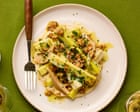
Chef Jackson Boxer, owner of several London restaurants including Brunswick House, Vesper, and Dove, and culinary director for Cowley Manor and Henrietta, has shared a vegan recipe for poached leeks with pickled pear and hazelnuts. Boxer emphasizes the importance of cooking leeks fresh, describing a warm, freshly poached leek as 'an ethereal, collapsing sigh' and warning that cold leeks can become 'a slippery and almost slimy mess.' The article suggests that leeks are a demanding vegetable but, when prepared correctly, offer a delicate and appealing texture. The recipe combines the perfectly poached leeks with the contrasting flavors and textures of pickled pears and nutty miso, aiming to highlight the leek's unique qualities.

The article introduces Àclèaf’s PX martini as the cocktail of the week, offering a unique twist on the traditional espresso martini. Developed by Andréa Nuninger, the restaurant manager at Àclèaf in Plympton, Devon, this innovative drink incorporates vanilla vodka. The vanilla vodka addition provides an oaked characteristic, which is crucial for balancing the sweetness inherent in the sherry used in the martini. This recipe offers a sophisticated variation for those who appreciate classic cocktails but are looking for new flavor profiles and an elevated drinking experience.

The Global Hunger Index (GHI) 2026 report indicates a severe food security crisis in Pakistan, ranking it 106 out of 122 countries, trailing behind regional neighbors like India (100th), Bangladesh (84th), and Iran (41st). Pakistan's GHI score for 2026 is 25.5, signifying a serious level of hunger, although this is an improvement from its 2000 score of 36.2. Despite this long-term improvement, the current score is worse than the South Asian average of 23.5 and the global average of 18.1. The report highlights Pakistan's poor performance in key hunger indicators, including child undernourishment, stunting, and child mortality rates. This situation reflects a concerning reversal in global food security trends, which had shown improvement for several decades before beginning to deteriorate again.

Punjab Chief Minister Maryam Nawaz Sharif reaffirmed her government's commitment to supporting farmers and enhancing food security in a message for World Food Day. She praised farmers and agricultural workers for their tireless efforts in ensuring food supplies, acknowledging their vital role in feeding millions despite challenges like climate change and extreme environmental changes. The Chief Minister emphasized the importance of adopting modern agricultural technologies, innovation, and mechanization to meet increasing food demands. She highlighted existing initiatives in Punjab, such as the Kisan Card, Green Tractor Scheme, agricultural mechanization, and the Model Agri Mall, which provide various facilities and support to farmers. Maryam Nawaz also announced plans to establish ten additional Agri Malls across Punjab to further facilitate farmers and strengthen the province's agricultural infrastructure, underscoring the critical contributions of farmers to national food security and agricultural development.

Helen Goh has shared a recipe for baked oats featuring morello cherries and almond, which she describes as a versatile, flapjack-style bake suitable for both breakfast and dessert. This particular recipe is her preferred pantry-friendly version, ideal for when fresh stone fruits and berries are out of season. Goh's inspiration for baked oats stems from Heidi Swanson's recipe in 'Super Natural Every Day.' She highlights morello cherries for their intense flavor and bright acidity, which withstand baking well, and pairs them with almonds and light coconut drinking milk. The recipe utilizes whole morello cherries in syrup, drained and dotted over the oats, which become jammy during baking, though other fruit compotes or jams can be substituted.

Cloudy and unfiltered wines, though an ancient practice, are experiencing a resurgence in popularity, with Marks & Spencer introducing 'Trouble,' the first cloudy still wine to a British supermarket in 2026. This trend follows the success of pét nat (pétillant naturel), an ancestral method sparkling wine that is typically undisgorged, retaining dead yeast cells and a cloudy appearance. Pét nats, known for being fresh and tangy, are gaining mainstream appeal, even for occasions like an autumn pizza night, as they lack the 'divisive sherbety notes' of prosecco. Supermarkets like M&S and Tesco have already begun stocking pét nat wines, signaling a broader acceptance and market for these distinct, less processed wines. The article highlights that what is presented as 'new' in the wine world often has deep historical roots, and this renewed interest in cloudy wines is a testament to that cycle.
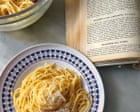
This article presents Rachel Roddy's recipe for spaghetti with Marmite, described as an umami-packed dish for quick flavor. It is a translation of an Italian recipe for spaghetti con l'estratto di carne (spaghetti with meat extract) from Ada Boni's cookbook, Il Talismano della Felicità (The Talisman of Happiness). The recipe involves boiling spaghetti, tossing it with butter and parmesan, then adding a dissolved spoonful of meat extract. Ada Boni's cookbook, recently published in English, is highly regarded by food writer Angela Frenda for its precision and accuracy, providing important context for the recipe's origin and significance. This simple and practical dish offers an exquisite flavor with minimal preparation time, highlighting its usefulness for those with busy schedules.

A United Nations official has warned that the failure to implement a proposed plan for fertilizer shipments through the Strait of Hormuz could lead to a significant global food crisis. This UN-backed mechanism, which could commence within 7-10 days of a deal between the United States and Iran, is critical because ongoing conflict has severely disrupted the outflow of fertilizer from the Gulf region. The article indicates that a resolution between the US and Iran has not yet been reached, highlighting the urgency of diplomatic efforts to prevent widespread food shortages. The Strait of Hormuz is a crucial chokepoint for maritime trade, and its disruption has far-reaching implications for global supply chains, particularly for agricultural inputs. The stalled shipments of fertilizer directly impact food production worldwide, underscoring the vital importance of this diplomatic and logistical challenge.
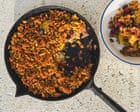
The article details a family tradition of preparing a fruit pie for their daughter's first day of school each September, with the goal of exploring various heritage desserts. Last year, they made a simple apple pie, and this year, they opted for a brown betty, a crumble-like dessert utilizing stale bread. The recipe featured seasonal apples and blackberries from their garden and was sweetened with maple syrup, though any fruit and sweetener can be used. The brown betty is described as a thrifty and delicious autumnal treat, similar to a cobbler, buckle, or grunt, highlighting its practicality in using 'waste not' ingredients like stale bread while creating a classic British pudding.
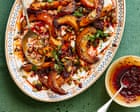
Joe Otway, a culinary expert, has provided four easy recipes designed for early autumn, focusing on celebrating seasonal British-grown produce. The recipes include a buttery cheese tart, a fresh corn salad, sweet roast squash with spicy 'nduja, and bitter radicchio leaves with a floral dressing. This period is highlighted as particularly generous for British produce, with sweetcorn at its peak, squash beginning to sweeten, and bitter leaves like radicchio offering balance. Otway's dishes emphasize letting natural ingredients shine through simple preparations and carefully chosen components, allowing nature to guide the menu and highlighting ingredients at their seasonal peak.

Adam Byatt, chef/owner of Trinity restaurant and cookbook author, offers expert advice on how to achieve clear chicken stock, addressing a common culinary dilemma. According to Byatt, cloudy stock is primarily caused by cooking it too quickly or allowing fat to re-emulsify into the liquid. He emphasizes the importance of a low and slow cooking process and consistent skimming of impurities. Additionally, Byatt recommends using a large, heavy pot that allows bones sufficient space to move and a very fine sieve for straining. This advice is crucial for home cooks looking to improve the quality of their stock, a fundamental ingredient in many dishes, making it a valuable kitchen aide.