News in seconds. In your language.

The University of Agriculture Faisalabad (UAF) and Guard Agriculture, a private agricultural research company, have entered into a three-year agreement to develop and commercialize hybrid wheat in Pakistan. This collaboration aims to achieve a significant 20 percent increase in per-acre wheat yield, a move considered crucial for boosting the nation's agricultural output. UAF will contribute its expertise in genetics, breeding, and agronomy, while Guard Agriculture will handle field trials, seed production, commercial assessments, and provide research funding. Dr. Zulfikar Ali, UAF Vice Chancellor, highlighted that hybrid wheat could enhance production without escalating farmers' input costs, with potential yields reaching 98 maunds per acre under optimal conditions. Guard Agriculture's CEO, Shahzad Ali Malik, anticipates that commercialization could take an additional three to four years, drawing on their prior success with hybrid rice to improve wheat productivity in Pakistan.

Archaeologists at Westminster Abbey have finally unraveled a long-standing mystery surrounding a Roman sarcophagus discovered within its grounds. The coffin, inscribed with the name Valerius Amandinus, was found to contain human remains. An expert has now proposed that the skeleton is not that of a Roman figure but rather an 11th-century abbot. This significant finding challenges initial assumptions based on the sarcophagus's origin and provides new insight into the burial practices and history of Westminster Abbey during the medieval period. The resolution of this 'who-is-it' mystery offers valuable historical context for the site and the individuals associated with it. This discovery is important because it highlights the complex historical layers present at such ancient sites and the ongoing work of archaeologists in reinterpreting artifacts.

New research challenges the common "bad apple" idiom by demonstrating how observing significant rule-breaking by others can escalate into widespread non-compliance, rather than isolating the behavior to a single individual. The study indicates that when people witness larger violations, they tend to increase their own rule-breaking, suggesting a contagious effect of misconduct. This phenomenon has implications for various contexts, from political corruption like politicians taking bribes to workplace issues such as bullying and harassment in City firms. The research highlights a critical dynamic where general adherence to rules can rapidly deteriorate into widespread rule-breaking, underscoring the importance of addressing rule violations comprehensively to prevent their proliferation throughout a group or organization.

Stargazers in the UK are anticipating the peak of the Orionid meteor shower this week, offering a celestial spectacle for those with clear skies. The event is expected to provide an opportunity to observe a significant number of meteors, with projections suggesting between 10 to 20 per hour during its zenith. This annual meteor shower is a remnant of Halley's Comet, which last passed by Earth in 1986 and will return in 2061. As the Earth passes through the comet's debris trail, these small particles burn up upon entering the atmosphere, creating the streaks of light known as meteors. The Orionids are particularly known for their speed and brightness, making them a popular event for amateur astronomers and casual observers alike. The visibility of the shower is highly dependent on local weather conditions, making clear, dark skies essential for the best viewing experience. This phenomenon offers a unique connection to one of the most famous comets in our solar system and a chance for public engagement with astronomy.

Japan successfully launched the Martian Moons eXploration (MMX) probe on Tuesday, marking the world's first mission to collect rock and sand samples from a Martian moon. The H3 rocket lifted off from the Tanegashima Space Centre, with the spacecraft reaching its planned orbit with exceptional precision. The 4,480-kilogram probe will travel to Phobos, Mars' larger moon, with an expected arrival in August 2027. A French-German rover will first land on Phobos, followed by two Japanese landings to collect samples, after which the probe will observe Deimos. The mission, which was delayed from 2024 due to a previous rocket failure, aims to determine how Mars' moons formed and advance future planetary exploration technologies, with samples expected to return to Earth in July 2031.

The Vishnu Purana, a significant text like other Puranas, consists of six sections (Ansh) with varying numbers of chapters (Adhyay), totaling many chapters across all sections. It was disseminated by Muni Ved Vyas and Shri Suta. A core tenet of the Vishnu Purana states that the universe originates from, resides within, and is sustained by Lord Vishnu, who alone existed before creation. From this primeval being, the entire cosmos, including mountains, oceans, islands, living beings, deities, and all creation, came into existence. The text details narratives such as the story of King Swayambhu Manu and his sons, the tales of King Vena and Prithu, the birth of Maharaja Prachin Barhi, the Narasimha avatar, and the life of Prahlad. It also describes the lineage of Kashyap and his wives, the reign of King Bharat, the geography of Jambudweep, and the seven netherworlds, beneath which resides the thousand-hooded Ananta serpent of Lord Vishnu. The Vishnu Purana further elaborates on cosmological concepts like the wheel of time, the origin of Ganga, and various astronomical cycles, along with the description of different Yugas, Vedas, and Puranas, the four main Vedas, eighteen Puranas, and fourteen Vidya. Furthermore, it recounts important life rituals, the stories of various royal lineages, including those of Ikshwanku, Soma, Yadavas, and Kauravas. Finally, the Purana describes events of the Kali Yuga, the marriage of Vasudeva and Devaki, the birth of Shri Krishna, his early life in Gokul and Brindaban, the subjugation of the Kaliya serpent, and the slaying of demons by Balaram and Krishna, culminating in the events leading to Kansa's demise.
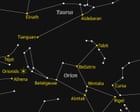
The annual Orionid meteor shower is reaching its peak this week, providing an opportunity for observers to witness fragments of Halley’s comet streaking across the night sky. Occurring every October, the shower happens as Earth passes through a stream of dust left behind by the famous comet. These tiny particles enter Earth's atmosphere at approximately 66 kilometers per second, heating the surrounding air and creating the ephemeral streaks of light known as meteors. Stargazers may anticipate seeing between 10 and 20 fragments per hour during this celestial event, which is a direct result of Earth's interaction with the comet's debris trail. This phenomenon offers a regular astronomical spectacle for those interested in observing natural space events.

A groundbreaking space mission is on the horizon, preparing to launch a spacecraft destined for Mars. The primary objective of this ambitious endeavor is to collect approximately 10 grams of dust from one of Mars's moons and successfully transport it back to Earth. This mission represents a significant leap in planetary science, as retrieving extraterrestrial material directly from a Martian moon could provide invaluable insights into the formation and evolution of Mars, its satellites, and potentially the early solar system. Such samples would allow scientists to conduct detailed laboratory analyses that are impossible with remote sensing, potentially revealing the moons' geological composition, mineralogy, and the presence of any organic compounds. The success of this mission would not only mark a technological triumph in space exploration but also open new avenues for understanding the red planet and its celestial neighbors.

Japan is set to embark on a groundbreaking five-year space mission, leading the world's first endeavor to collect samples from Phobos, one of Mars's two small, irregularly shaped moons. This ambitious undertaking, spearheaded by the Japanese space agency, aims to unravel the mysteries surrounding the formation of Phobos and its sibling moon, Deimos. Scientists involved in the mission hope that the collected samples will offer crucial insights into their origins, and potentially even provide vital clues regarding the genesis of life within our solar system. The mission highlights Japan's leadership in space exploration and its commitment to advancing our understanding of celestial bodies.

A dinosaur fossil, previously overlooked in a museum for nearly a century, has been identified as Invictibellatrix amberina, a new meat-eating species. This dinosaur, roughly the size of a large tiger, lived in Britain approximately 120 million years ago and possessed large curved claws, distinguishing it from T. rex. Researchers from University College London (UCL) studied the fossil, found on the Isle of Wight, and published their findings, confirming it as the first known European megaraptoran. This discovery fills a significant gap in the understanding of megaraptoran evolution and geographic spread, supporting the theory that this group of carnivorous dinosaurs migrated from Asia through Europe before reaching Gondwana. The finding suggests that even though Invictibellatrix was one of the earliest and smallest megaraptorans, its hunting behavior would have made human-sized prey suitable, highlighting its role as a significant predator in its ecosystem.

Writer Linda Geddes discovered her byline was fraudulently used on a New York Post article about "chronoworking," a topic aligning with her expertise in circadian rhythms. The deception came to light when someone she didn't know tagged her on LinkedIn, thanking her for an interview she never conducted for the article. This bizarre incident prompted Geddes to investigate, revealing a world of shadowy impersonators who exploited her name and professional reputation for articles she did not write. The case highlights the vulnerability of writers to identity theft and the potential for reputational damage when fraudsters publish content under stolen bylines. Geddes's personal experience underscores a concerning trend where professional identities are co-opted, making it crucial for individuals to monitor their online presence and bylines to prevent unauthorized use and maintain their journalistic integrity.
NASA's James Webb Space Telescope has detected a mysterious signal of light from a previously unidentified region in the constellation Fornax, a part of the southern sky studied for decades by astronomers including the Hubble Space Telescope. The signal was recorded twice, 88 days apart, in August and November 2023, appearing as a distinct line of light at approximately 1.6 micrometres that was not present in earlier observations. Researchers used the telescope's Near-Infrared Spectrograph to analyze the light, and observations from different angles make it unlikely to be a technical malfunction. Scientists have proposed several explanations, such as an early or young galaxy, an exploding star, or a black hole, but none fully explain all evidence. Further, more sensitive observations and additional spectral features are needed to confirm the source, its distance, and its nature, as the expansion of the universe complicates identification.

After decades of debate regarding the complexity of the leap second in computer systems, global timekeepers have officially voted to replace it with the concept of a 'leap hour.' Delegates from 69 countries participated in the vote at a conference held by the International Bureau of Weights and Measures in France. This organization is responsible for maintaining global standards across various measurements, including time. While the leap second has been deemed untenable, the first implementation of a leap hour is not anticipated for thousands of years. This decision addresses long-standing concerns about the impact of the leap second on technological infrastructure and represents a significant shift in how global time will be managed.

A recently analyzed 75,000-year-old Neanderthal spear wound has provided compelling new evidence suggesting that lethal violence was a more common and defining aspect of early human life than previously believed. The discovery challenges prior understandings of social structures and conflict within Neanderthal communities, indicating that interpersonal or intergroup aggression could have been a significant selective pressure. This particular injury, found on Neanderthal remains, is interpreted by researchers as the result of a deliberate act of violence rather than a hunting accident, given its specific location and nature. The finding is crucial because it pushes back the timeline for when organized or serious fighting began to shape human societies, offering insights into the harsh realities faced by our ancient ancestors. Understanding the prevalence of violence in the deep past helps illuminate the evolutionary trajectory of human behavior and the development of defensive or cooperative strategies.
Pakistan, represented by its Ministry of Federal Education and Professional Training, along with the Arab League Educational, Cultural and Scientific Organisation (ALECSO) and the OIC Ministerial Standing Committee on Scientific and Technological Cooperation (COMSTECH), signed a memorandum of understanding (MoU) in Islamabad on Thursday. This agreement aims to significantly strengthen academic, scientific, and technological cooperation between Pakistan and Arab countries. The MoU, signed by key educational and scientific figures, outlines plans to develop joint educational and scientific programs in areas like science, technology, and innovation, facilitate collaborations on conferences and training, and establish ALECSO Chairs at Pakistani universities. Furthermore, it seeks to enhance links between research institutions, explore scholarships, and promote exchanges of experts and knowledge sharing. This partnership is seen as a new phase in educational relations, expected to create practical opportunities for students, teachers, and researchers through various academic initiatives and joint research.

The practice of adding a leap second to global timekeeping, a method used to synchronize atomic clocks with the Earth's irregular rotation, is facing potential elimination. This change is being considered by international timekeepers who periodically add a second to Coordinated Universal Time (UTC) to keep our precise clocks aligned with the planet's astronomical time. The decision to potentially discontinue leap seconds is significant because it would alter a long-standing mechanism for time synchronization, moving towards a system where a small but growing discrepancy between atomic time and Earth's rotation would be allowed to accumulate. While seemingly minor, the leap second has proven to be a complex challenge for computer systems and networks, sometimes causing disruptions. The debate involves global scientific and technical bodies responsible for defining and maintaining international time standards, highlighting a pivotal moment in the future of precise timekeeping and how humanity measures the passage of time.

Intero Biosystems is offering lab-grown human intestines to pharmaceutical companies, providing an alternative to traditional animal testing methods. This initiative comes as regulatory bodies increasingly advocate for the adoption of non-animal testing protocols in drug development. The startup's primary objective is to scale up its production capabilities for these mini human intestines and further advance its organoid technology. By supplying these biomimetic models, Intero Biosystems aims to improve the efficacy and ethical considerations of drug testing, potentially leading to more accurate results that better reflect human physiological responses. This development is significant for the biotechnology sector and the pharmaceutical industry as it addresses growing concerns about animal welfare and the limitations of animal models in predicting human drug reactions, offering a more human-relevant testing platform.

A 1960 scientific study published in the journal Science, titled "The Doomsday: Friday, 13 November, A.D. 2026," by physicist Heinz von Foerster and his University of Illinois colleagues, predicted that the world's population would reach an extreme mathematical limit on November 13, 2026. The researchers developed a mathematical model based on historical population growth trends, suggesting that if existing acceleration continued unchecked, the global population would approach infinity on that date, putting immense pressure on resources. However, the study did not forecast an actual apocalyptic event, but rather the mathematical breakdown under its assumptions of indefinite accelerating growth. Current population projections from the United Nations anticipate the global population peaking around 10.3 billion in the mid-2080s before a slight decline, indicating that the 1960 paper's premise has been altered by changing demographics like falling birth rates. Consequently, there is no credible scientific or anthropological evidence supporting an imminent end for Earth or humanity on November 13, 2026.

Archaeologists have made a significant discovery off the coast of Turkey, identifying what is now believed to be the world's oldest shipwreck. This ancient vessel dates back an astonishing 4,700 years, placing its origin firmly in the Early Bronze Age. The find provides invaluable insight into ancient maritime history, shipbuilding techniques, and trade routes during a critical period of human development. The historical context of the Early Bronze Age is essential, as it marked a time of significant cultural and technological advancements across various civilizations in the region. This discovery is not merely an archaeological marvel but also a crucial piece in understanding the intricate tapestry of early human navigation and interaction, offering unprecedented details about life and commerce thousands of years ago.

Max Hodak, co-founder and former president of Neuralink, revealed details about his new company's advancements at TechCrunch Disrupt. His venture has successfully implanted its vision-restoring chip, named PRIMA, into its first human patient suffering from Stargardt disease. This significant step represents a crucial milestone on the company's trajectory toward developing a novel brain-computer interface (BCI). The move is noteworthy as it marks a progression from theoretical discussions to practical, human application in the field of neural technology and offers potential hope for individuals with debilitating vision impairments like Stargardt disease. The implant is part of a broader strategy to interface the human brain directly with external computing systems, an area pioneered by Hodak in his previous role. This development is important for the scientific and medical communities, potentially paving the way for future therapeutic applications and a deeper understanding of human-computer interaction.

A recent study suggests a novel approach to language acquisition, emphasizing the importance of focusing on the phonetic qualities of a language rather than immediately diving into vocabulary and grammar. Researchers discovered that highly proficient linguists process unfamiliar foreign speech sounds in a manner akin to how they process non-speech sounds, indicating a foundational difference in their auditory processing. This finding challenges traditional language learning methods that prioritize semantic understanding from the outset. The core idea is that treating foreign words initially as abstract sounds, rather than meaningful units, may be a more effective strategy for the brain to master a new language. This research could significantly impact pedagogical methods for language education, potentially leading to new curricula that prioritize auditory training and phonological awareness, aiming to emulate the natural learning processes observed in individuals with exceptional linguistic abilities.

Scientists are exploring innovative methods, including AI and 'tutors,' to help bird populations recover lost songs, a critical skill for attracting mates when populations decline. This research offers a glimmer of hope for species survival, as demonstrated by a recent experiment in Buenos Aires. Researchers there successfully reintroduced a rufous-collared sparrow song from the 1960s, which had vanished from the area, using a computer-generated rendition. Within three months of playing the AI-generated tune, a local sparrow began to mimic parts of the forgotten song, suggesting that technology can play a significant role in avian conservation efforts by re-teaching birds essential communication patterns. This initiative highlights the potential of combining artificial intelligence with ecological understanding to address challenges faced by endangered species.

A new study has revealed that elephants, much like humans, call each other by names. This groundbreaking research indicates a sophisticated level of communication within elephant herds. The study involved extensive observation and analysis of elephant vocalizations in their natural habitats. Scientists recorded various calls and identified distinct sounds that appear to be used to address individual elephants, suggesting a form of personalized addressing system. This discovery challenges previous understandings of animal communication and highlights the complex social structures present in elephant societies. The findings have significant implications for conservation efforts, emphasizing the intelligence and intricate social bonds of these magnificent creatures.

A crew searching for thehart has arrived at a remote, crab-infested island, where they will conduct their research while sleeping on their ship. The decision to remain on board stems from the presence of giant crabs known for their strength, capable of lifting heavy objects and splitting coconuts. These specific crustaceans are of interest to the researchers due to a theory suggesting they may have played a role in Earhart's disappearance and ultimate demise. The expedition aims to uncover new evidence regarding the fate of the pioneering aviator.

